what is schistosomiasis?

More than 200 million people worldwide are infected with this water-borne disease caused by parasitic worms, with an estimated 280,000 dying every year in Africa. Schistosomiasis is often found in conditions of poverty where access to clean water and sanitation are poor. When disease burden and economic impact are taken into account, it is regarded as one of the most devastating neglected tropical diseases.

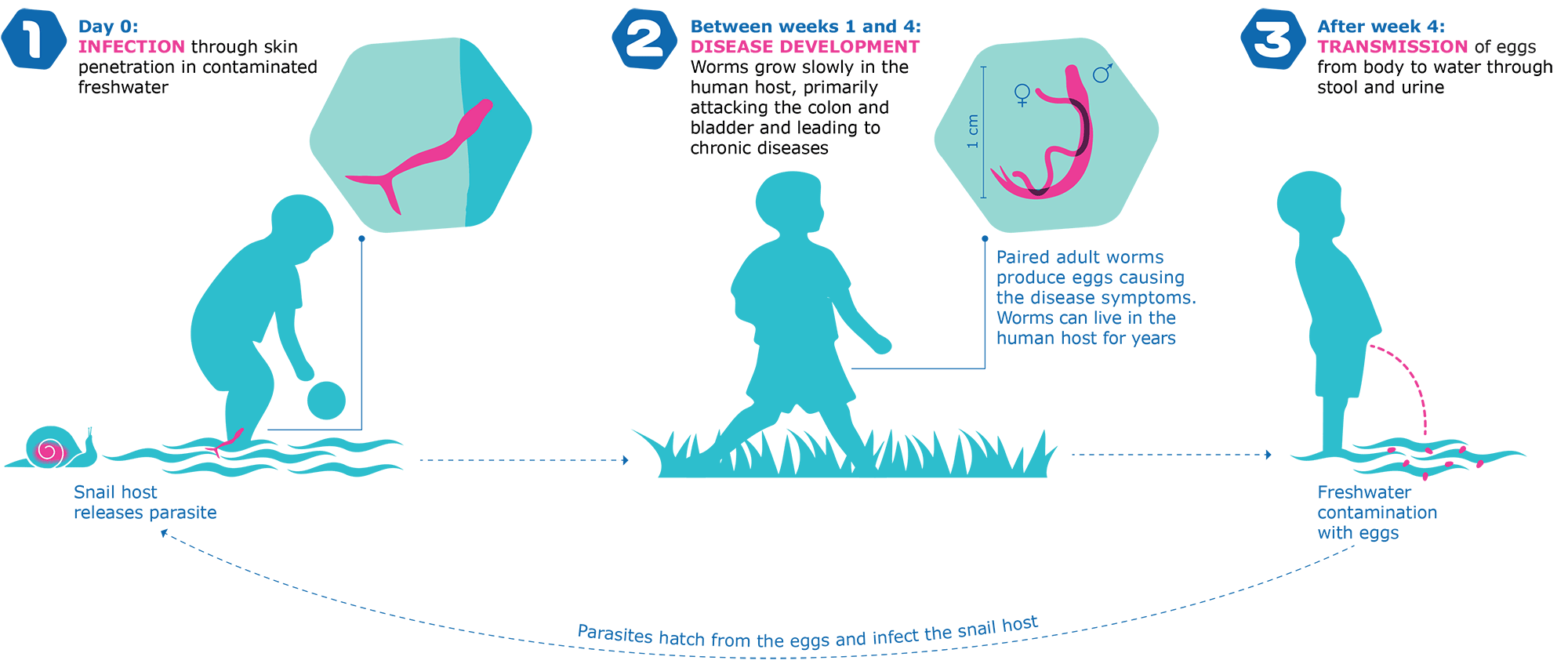
How does
it spread?

How does it spread

How are people
affected?

Infection is especially high in children and can lead to a range of symptoms and problems, depending on the exact area that is infected, such as anaemia, abdominal pain and swelling, blood in urine/stool or bladder cancer. These symptoms can negatively impact cognitive development and growth in children. It can also affect community and economic development, as infected adults who have a chronic infection, often dating back to childhood, become debilitated and unable to work.

92% of the estimated cases are found in sub-Saharan Africa

How is it treated?

All forms of schistosomiasis can be treated with praziquantel. Millions have been treated in programs of mass drug administration using praziquantel - usually school-attending children aged 6-14.